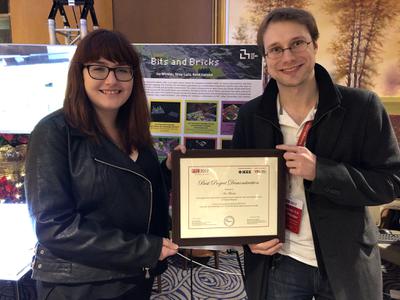
"Bits and Bricks" Wins Best Demo Award at IEEE Future Technologies Conference
Ira Winder and the Tactile Matrix won the award for best demonstration at the IEEE Future Technologies Conference.
Ira Winder and the Tactile Matrix won the award for best demonstration at the IEEE Future Technologies Conference.
When I brought the robot home from the Apple Store, I knew I was inviting a new kind of strangeness into our lives. My wife worried about giving our 4-year-old son a(nother) digital thing, a “smart” thing. I worried that he wouldn’t know what to make of it. Or that his little sister would break it.…
Esra’a Al Shafei is the Founder and Director of Majal, a nonprofit that helps build communities and digital platforms that celebrate, protect, and promote diversity and social justice. Majal focuses primarily on issues that receive little or no attention: From rights of the invisible lower income m…
Here & Now's Jeremy Hobson talks with Anushka Shah (@anushka1991), a researcher at the MIT Center for Civic Media.
Our analysis found Hurricanes Harvey and Irma got far more coverage than Maria did.
At EmTech 2017, Iyad Rahwan discusses how can we anticipate and respond to major disruptions from artificial intelligence, the web, and social media to the way we work, learn, cooperate, and govern society.
At EmTech 2017, Iyad Rahwan discussed artificial intelligence, urbanization, and the future of work with MIT Technology Review senior editor Elizabeth Woyke.
Reid Hoffman likes to say, “With great power comes great responsibility.” Usually, he’s referring to tech companies like the ones he has founded (LinkedIn), helped lead (PayPal), or advised (Microsoft) during his storied career. But he could also be talking about his own clout in the business world…
At EmTech 2017, Deb Roy discusses how insights gained from big data and machine learning can help us monitor the social impact of new technologies.
They are reading to kids, singing lullabies to them and even taking naps with them. Artificial Intelligence (AI) toys are coming into our homes, and these friendly robots are becoming more and more sophisticated — and raising concern for tech watchers."A big danger is to have misconceptions and tru…
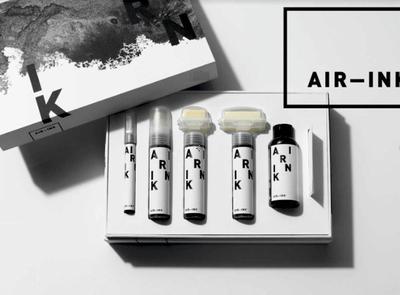
On a break from his studies in the MIT Media Lab, Anirudh Sharma SM ’14 traveled home to Mumbai, India. While there, he noticed that throughout the day his T-shirts were gradually accumulating something that resembled dirt.“I realized this was air pollution, or sooty particulate matter, made of bla…
We have Catherine D’Ignazio on the show this week to talk about feminist data visualization. Catherine is Assistant Professor of Data Visualization and Civic Media at Emerson College, where she works across art, design, science and research.On the show Catherine explains how feminist theory can be …
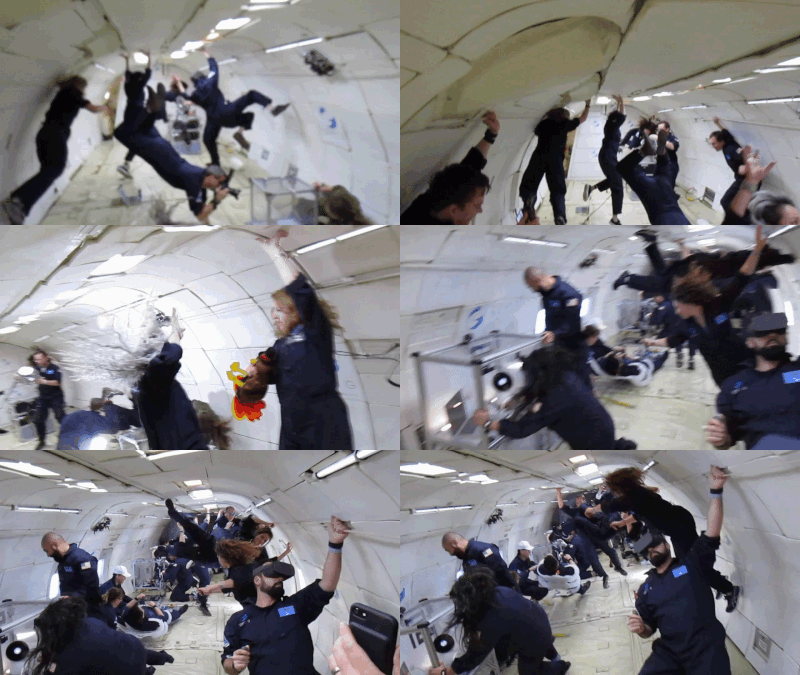
Reimagining research for life in space
A strange song, full of pumping percussion and instrumentals with random patterns, began to erupt from the speakers.David Sun Kong ’01, SM ’04, PhD ’08 stood on stage at this year’s International Genetically Engineered Machine competition (iGEM). “This,” he told the 6,000 participants, “is what you…
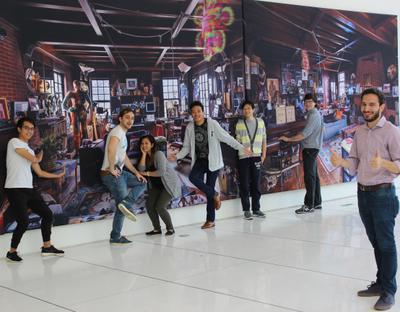
Fadel Adib reflects on the whirlwind first year of his group, Signal Kinetics.

TreeSense, a sensory VR experience that allows users to experience the full lifecycle of a tree, was featured in the Global Grad Show at Dubai Design Week 2017. The Global Grad Show highlights "beautiful ideas" from more than 90 universities worldwide, showcasing work that emphasizes innovation, e…
As many Americans despair over disappearing factory jobs and fear being replaced by a machine, Natan Linder has set out to arm assembly-line workers with cutting-edge technology and help preserve the U.S. manufacturing market. He's launched Tulip, an app that connects every element of a production …
"Real-Time Recognition of Physical Activities and Their Intensities Using Wireless Accelerometers and a Heart Rate Monitor," presented at the 2007 International Symposium on Wearable Computers, received the ISWC 10-Year Impact Award (Paper With Most Impact From ISWC2007) at the ACM International J…
It’s cute when a kid asks, “Alexa, did you farted?,” but as the realm of smart technology quickly evolves from household voice assistants to tangible, intelligent toys, how should we monitor children’s relationship with AI?
It’s Thanksgiving season again, and the double shadow on our great American food holiday is feast and famine, both. A bounteous industrial food system is wasting the land and leaving a billion of us humans hungry, and another billion both overfed and undernourished. As climate change kicks in, the…
Mahler once quipped that “tradition” often represents nothing more than lazy, outdated habits of mind. In the postwar years, the composer, conductor, and avant-garde firebrand Pierre Boulez weaponized this sentiment through his own outré brand of polemics: Blow up the opera houses! Destroy the Mona…
Timing can be everything when it comes to successfully expanding constitutional rights. Now, a study looking at how constitutions around the world have evolved has revealed patterns that could help people predict the best moment to introduce such changes.Amendments are generally introduced into a c…

Piezoelectric sensors have many applications including as vibration sensors, accelerometers, energy harvesters, and even electronic drum pad
This October, MIT celebrated the inaugural MIT Legal Forum on AI & Blockchain which aimed to provide a space in which legal professionals could discuss the future of AI and blockchain in the legal industry. In this report from On The Road, host Jonathan Askin talks to Professor Alex Pentland about …