Why we need a new, algorithmic social contract
How can we reap the benefits of Artificial Intelligence while minimizing the risks it poses to society?
How can we reap the benefits of Artificial Intelligence while minimizing the risks it poses to society?
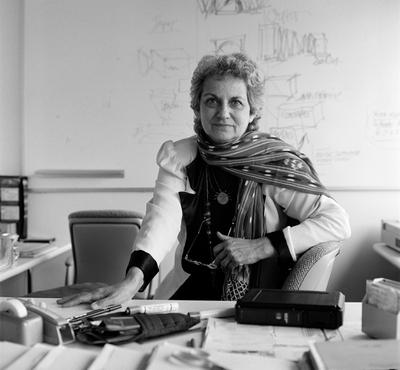
Celebrating the design pioneer whose work continues to inspire outspoken creativity.
Innovations are looming in food, medicine, brain-machine interfaces, sex, sleep, and do-it-yourself biology. That’s the picture we got from asking several researchers and entrepreneurs what they’re looking forward to this year—and what they want people to understand about their work.
Helping readers slow down, ask questions, and find reasoned opposing views may foster civil discourse online
An AI algorithm can predict which parts of a film will generate the greatest emotional responses in audiences.
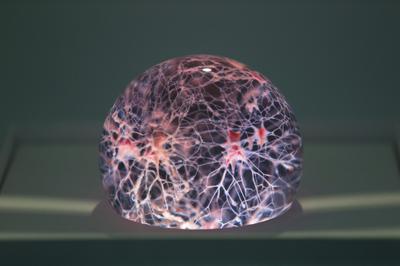
It’s been a turbulent 2017 here at the Media Lab and in the world beyond.
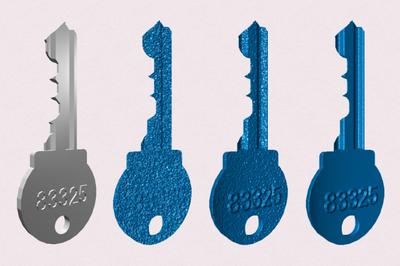
Computational method improves the resolution of time-of-flight depth sensors 1,000-fold.
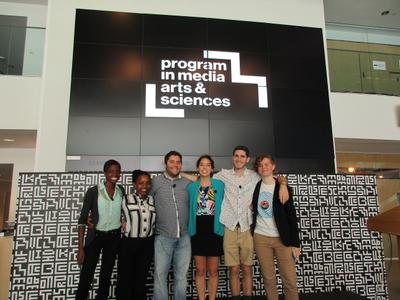
The MIT Summer Research Program (MSRP) seeks to promote the value of graduate education; to improve the research enterprise through increased diversity; and to prepare and recruit the best and brightest for graduate education at MIT. The program works to increase the number of underrepresented min…

On Friday, MIT Technology Review published an article on the cryptocurrency IOTA. However, we at the Media Lab have issues with the story
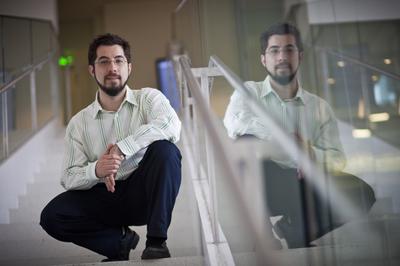
Ed Boyden together with MIT colleagues Yet Ming Chiang and Ian W. Hunter have been named to the 2017 class of Fellows of the National Academy of Inventors (NAI). Election to NAI Fellow status is a professional accolade bestowed to academic inventors who have demonstrated a prolific spirit of innov…
New research can predict how plots, images, and music affect your emotions while watching a movie.
Researchers want to know what images make us feel more attached to other people. They call their project “Deep Empathy.”
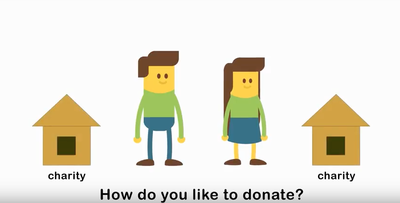
It’s the holiday season, which to many people means a season of giving—to loved ones, colleagues, public radio and television, and to any number of the countless charities seeking support. Nearly a third of all annual charitable giving occurs in December, and many nonprofits raise as much as half o…
Artificial intelligence (AI) may not be ready to write the next blockbuster movie, but a team of AI researchers from the Massachusetts Institute of Technology’s (MIT) Media Lab successfully used machine learning to teach computers about emotional arcs in movies.The researchers, which collaborated f…
Computers don’t cry during sad stories, but they can tell when we will.
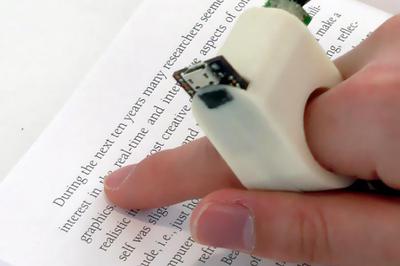
FingerReader, a wearable interface that uses audio and haptic feedback to enhance the reading experience, was selected for a 2017 Golden Pin Concept Design Award. Out of more than 4,000 entrants, only six were chosen for this year's exhibition at the Taiwan Design Museum.

At UNICEF Innovation, we’re supporting our partners to help build models that give us a better understanding of empathy. We hear in the news about how artificial intelligence (AI) can be a tool for evil — how robots can take over the world, or how automation will take away jobs. Often that comes fr…
How well have humans adapted to the current climate, and how will we adapt to new climate complexities?This week, the Climate Conversations team is joined by climate research scientist Nick Obradovich, who discusses the many ways the climate affects us in our day-to-day lives, including the way we …
PI Proposal Initiation (PIPI ) Form
A tool from MIT Media Lab offers a simple way to spark inspiration through random–and often nonsensical–design prompts.
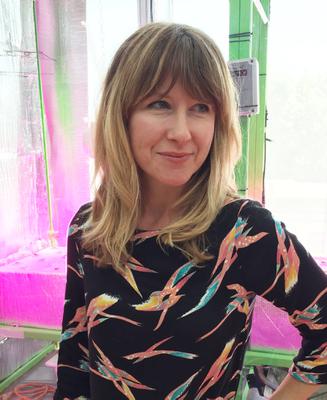
"We’re kind of a kitchen, which is great because that’s the stuff that I love."
New 3D camera research from the Media Lab’s Camera Culture group was selected for the Best Papers Special Issue of the ICCV.
Research scientist Manuel Cebrian discusses Shelley with CNN en Español host Andrés Oppenheimer.

On Monday, 12/4, the daily Google Doodle featured the first-ever coding doodle, made of Scratch Blocks.