Innovative composer hopes to unify the Koreas: Through his work, Tod Machover has shown the power of music, technology
Opera of the Future head Tod Machover talks to Korea JoongAng Daily about “Symphony for the Koreas.”
Opera of the Future head Tod Machover talks to Korea JoongAng Daily about “Symphony for the Koreas.”
Foundation’s $28.6 million gift will fund science, innovation, and education to advance understanding, ability, and inclusion.
Mike Bove, head of the Object-Based Media group, on the current state of the technology and what his research team is working on.
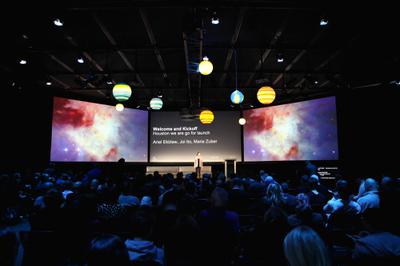
Teleportation may have to wait.
Rosalind Picard and Kate Darling join other experts to discuss how and why humans empathize with machines.
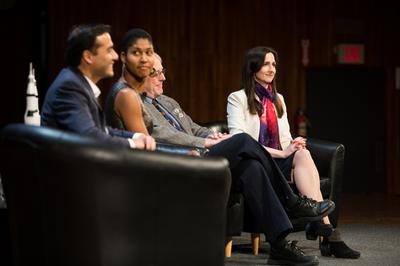
Symposium featuring former astronauts and other Apollo mission luminaries examines the program’s legacy.
Communicating a message through entertainment can be difficult, because you have to be careful not to preach to the audience.
Researchers find that, in published AI research, industry is overtaking academia, and the diversity of fields represented has declined.
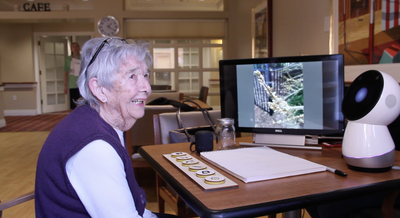
Researchers present a user-centered design approach to creating intelligent social technologies to empower and help older adults at home.
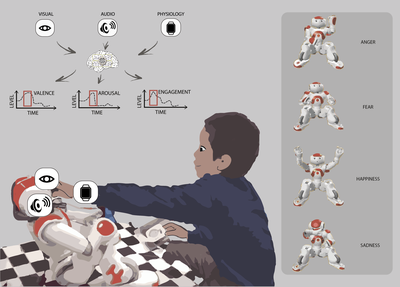
The technology being developed can enable personalized interactions with an autistic child, helping therapists to engage their attention.

Joi Ito ponders the fearmongering and lack of rigorous research surrounding kids and screen time.
Researchers say new facilities in space should be available to scientists from any country.

Joi Ito talks to Walter Isaacson about AI, ethics, biotech, and how being a DJ prepared him to become the director of the Media Lab.
Congratulations to alum David Moinina Sengeh, who has been named as one of the World Economic Forum’s Young Global Leaders.
Esteban Moro talks to WBUR about the Human Dynamics group's Atlas of Inequality.

Ed Boyden, Ernst Bamberg, Karl Deisseroth, Peter Hegemann, Gero Miesenböck, and Georg Nagel awarded one of America's oldest science prizes.

Public talk outlines ambitious plans to make his nation a hub for technology and innovation.
These maps show “place inequality"—or why people of different income levels are at different coffee shops.
Senior leaders should consider how emotion AI could change their industries and play a critical role in their firms.
Research projects show creative ways MIT students are connecting computing to other fields.
MIT Media Lab’s new interactive “Atlas of Inequality” shows that “segregation is not just about where you live, but what you do."

TerMITes have been installed in a women's restroom in India to better understand and help future development as the project expands.
Interview with Michael Bove about the work of Stephen A. Benton.