KnitARobo: Industrial Machine Knitting of Electromechanical Textile Interfaces with Liquid Crystal Elastomer Fibers
Imagine a sweater that communicates through gentle squeezes, a scarf that reveals hidden messages, or a knitted flower that slowly blooms to mark the passage of time. KnitARobo brings these possibilities closer to reality by introducing a method for producing shape-changing textiles using industrial knitting machines.
Building on our previous work with FibeRobo, KnitARobo integrates programmable movement directly into the structure of knitted fabrics. The technique combines liquid crystal elastomer (LCE) fibers, which contract when heated, with conductive yarns that act as embedded heating elements. By varying how these fibers are arranged within the knit, designers can program fabrics to fold, curl, twist, and contract in different ways. The resulting textiles remain soft, flexible, breathable, and comfortable to wear, with movements controlled electronically through a small, portable wireless controller.
A central contribution of KnitARobo is its compatibility with existing textile manufacturing processes. Previous approaches to actuating textiles have relied on specialized fabrication techniques or manual assembly, making them difficult to produce at scale. KnitARobo uses standard industrial knitting equipment without requiring modifications to the machines, opening a path toward manufacturing interactive garments using established production infrastructure.
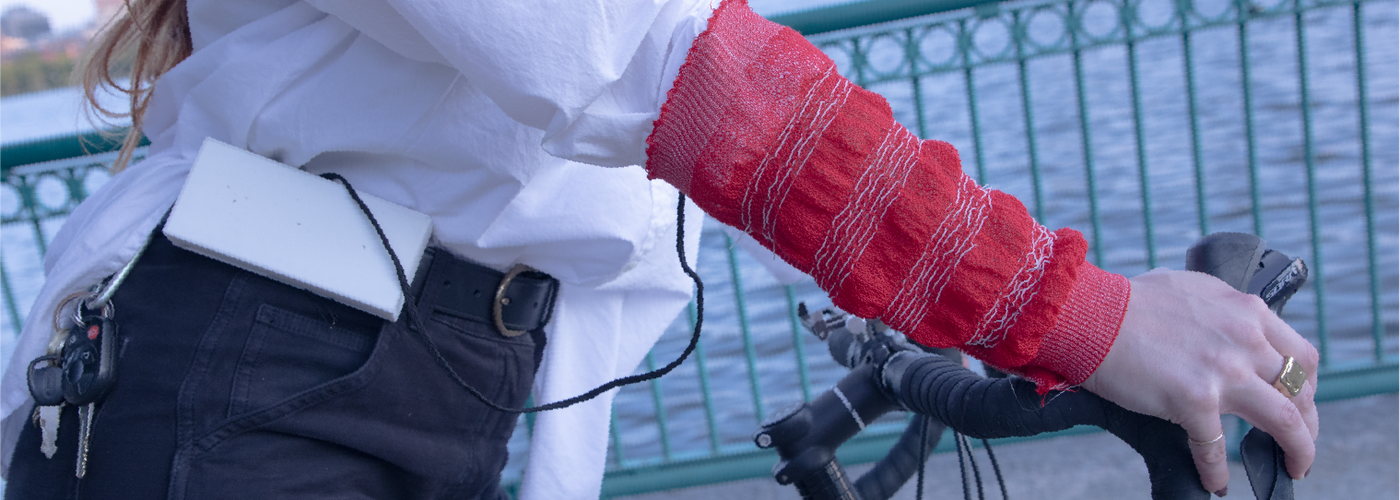
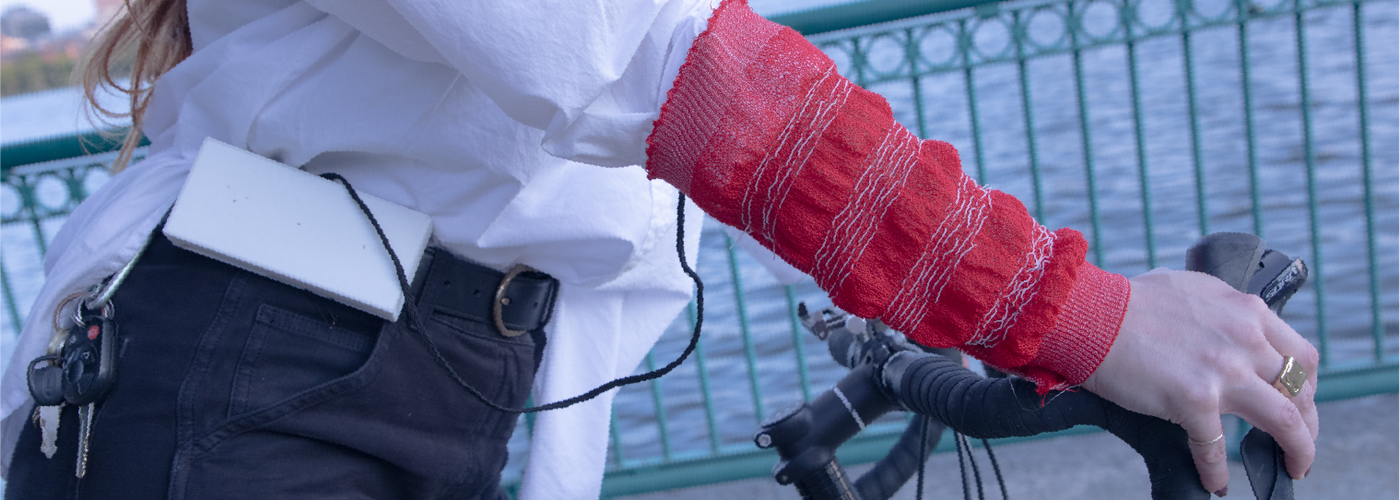
To demonstrate the technique, we developed three wearable prototypes: a sleeve that communicates cycling directions through gentle pressure on the arm, a scarf that reveals messages through folding fabric, and a knitted flower that gradually opens to indicate the passage of time. Together, these examples explore how movement and touch can become expressive qualities of everyday clothing.
KnitARobo offers a foundation for a new generation of responsive garments, bringing programmable material behavior into the familiar world of textile design and manufacturing.
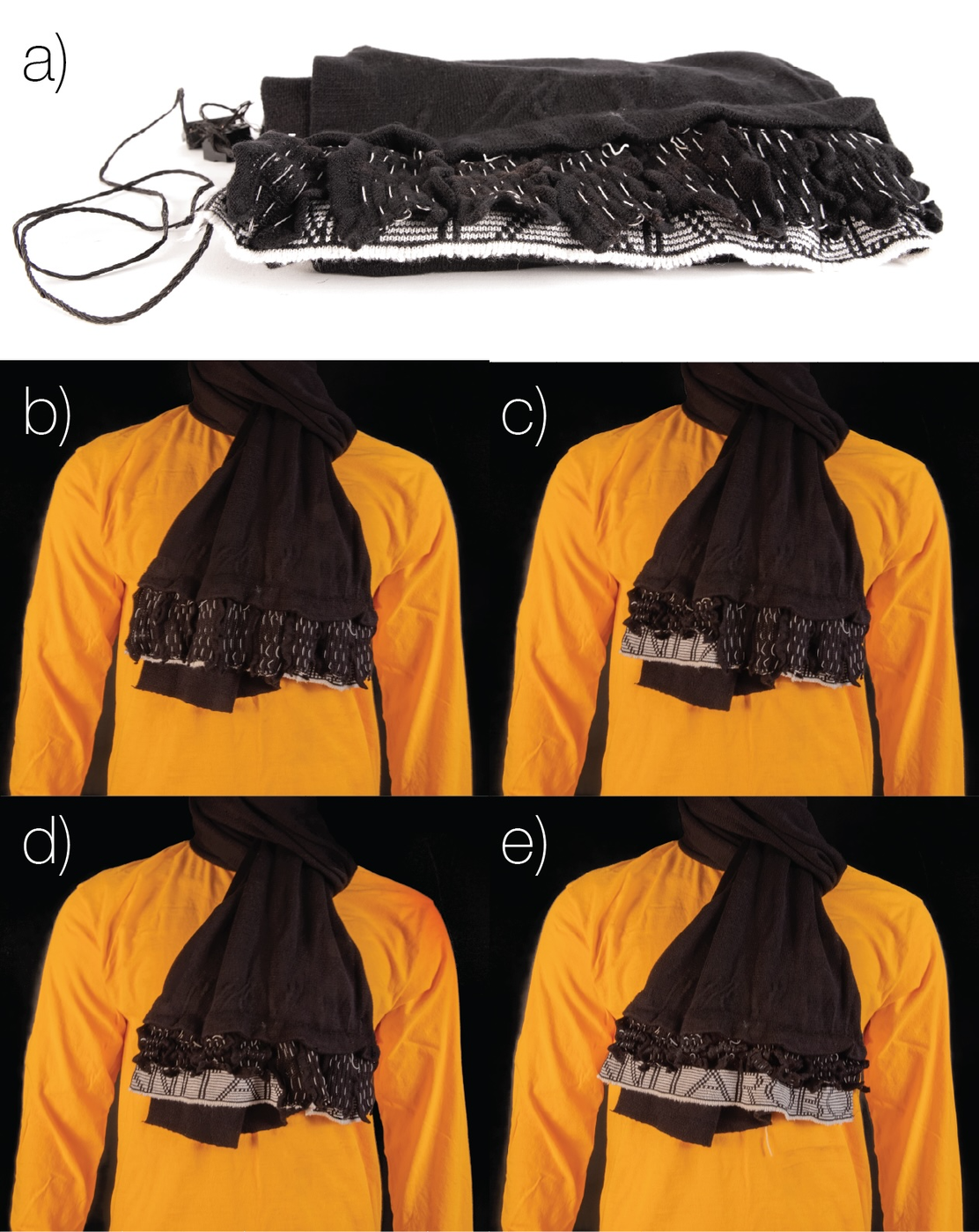
An interactive scarf acting as a soft flap display.
Credit:Jack Forman
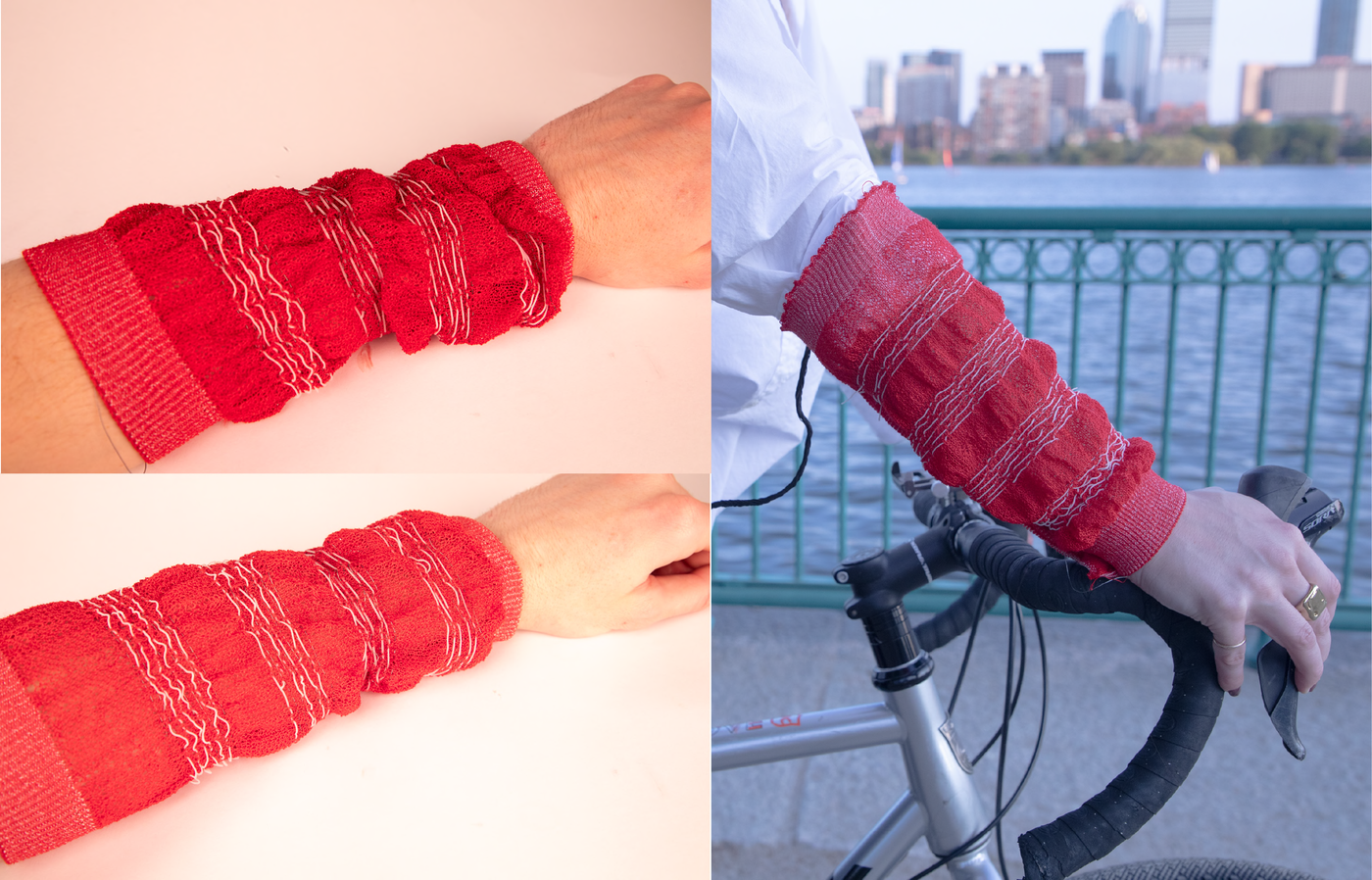
The haptic sleeve while squeezing (top left) and resting (bottom left), and in use while biking (right).
Credit:Jack forman
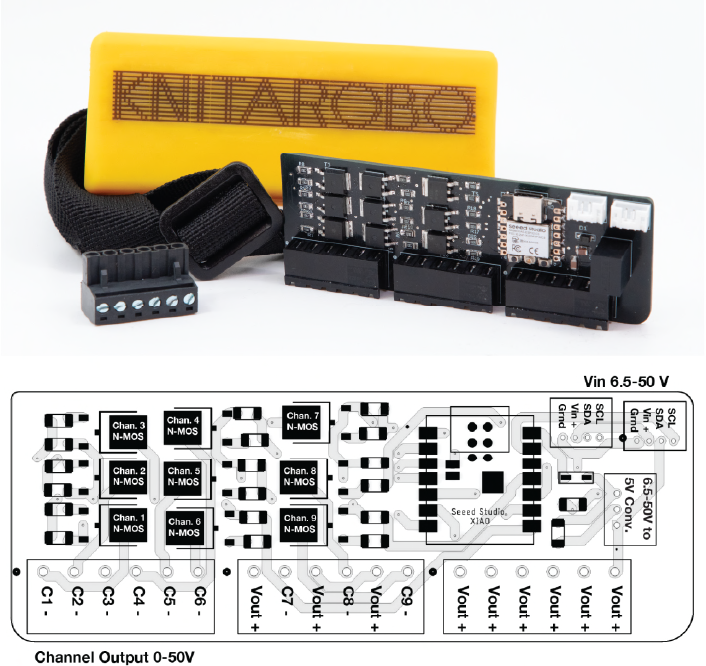
Top, the controller PCB mounted to a belt buckle enclosure with quick disconnect screw terminals. Bottom, a schematic of the PCB.
Credit:
Jack Forman
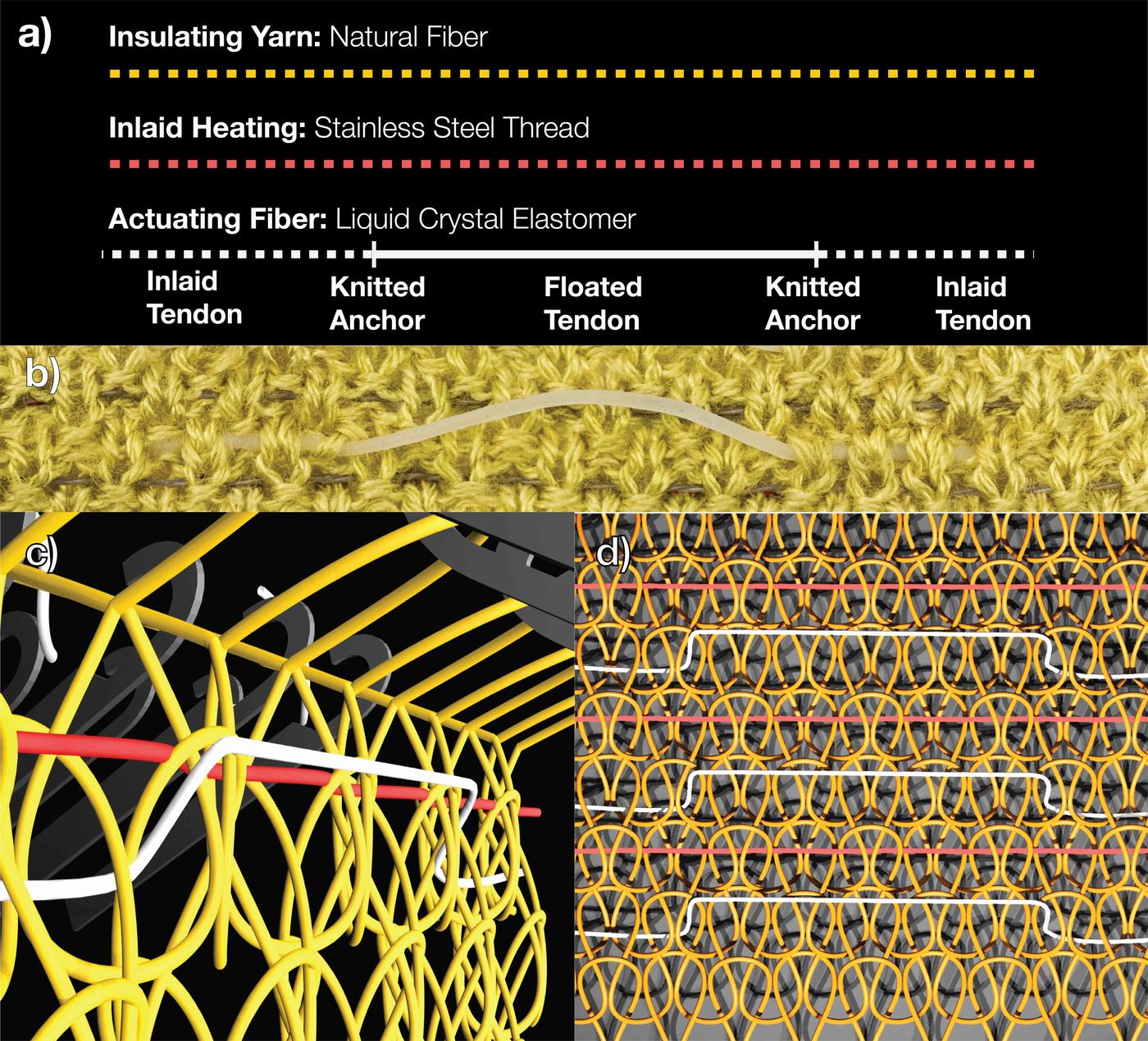
Anatomy of a basic KnitARobo Actuator. a) an abstracted diagram of a simple hinge actuator. b) a corresponding photograph of the knitted hinge. c) a rendering of the knitting process for the hinge actuator. d) A rendering of many hinge actuators.
Credit:
Jack Forman
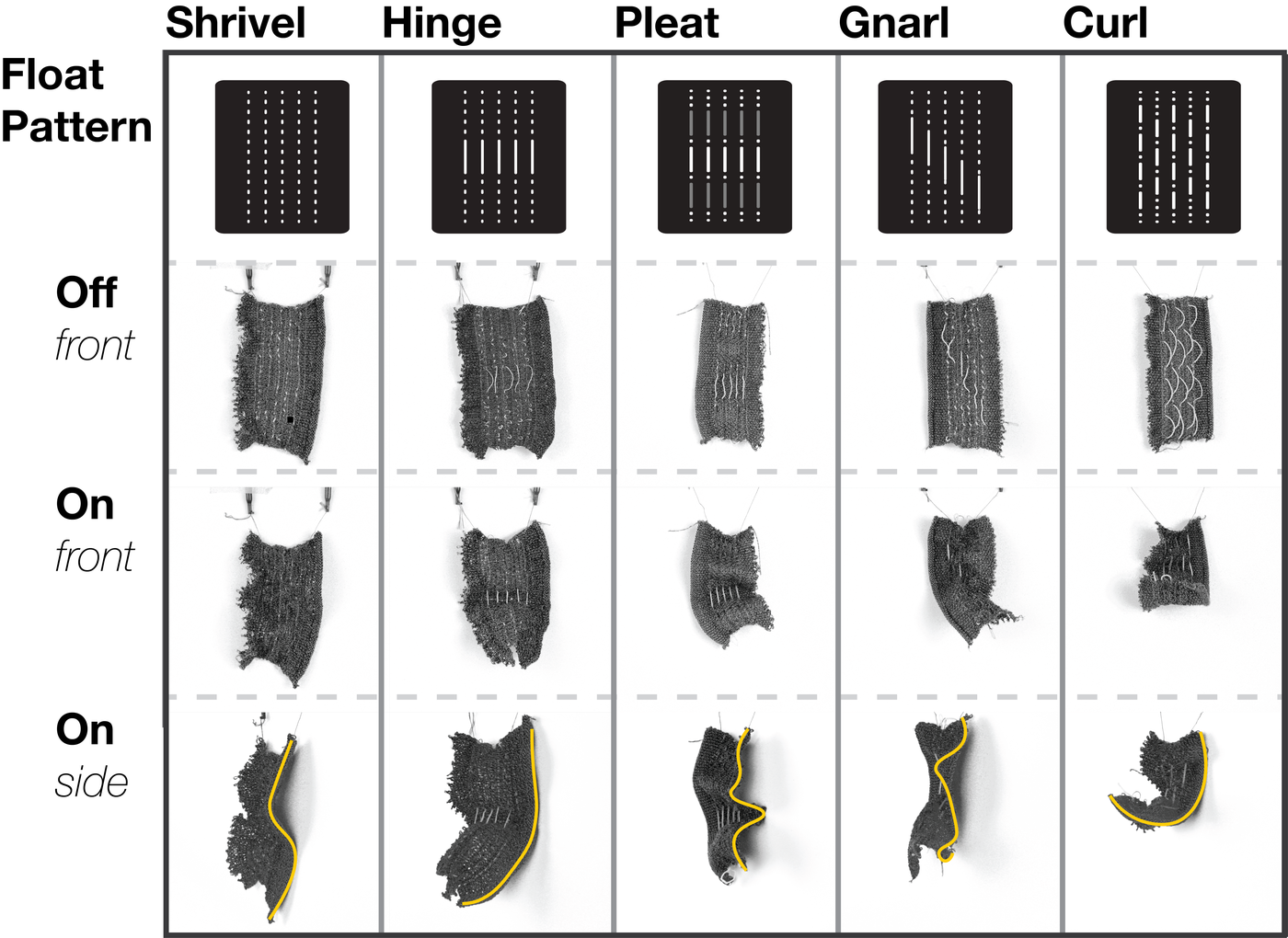
Morphologies of our diagrammed actuation patterns. For the side view, the camera-facing edge is traced in orange. Dotted lines show braced LCE and solid lines show free tendons on the front (white) and back (gray).
Credit:
Jack Forman