WHx
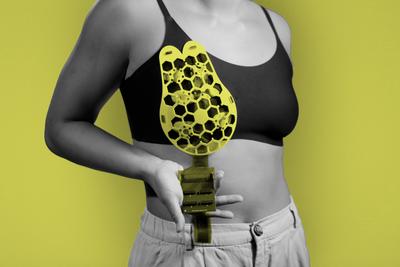
WHx Program: Unlocking women's health through transformative technologies
WHx Program: Unlocking women's health through transformative technologies
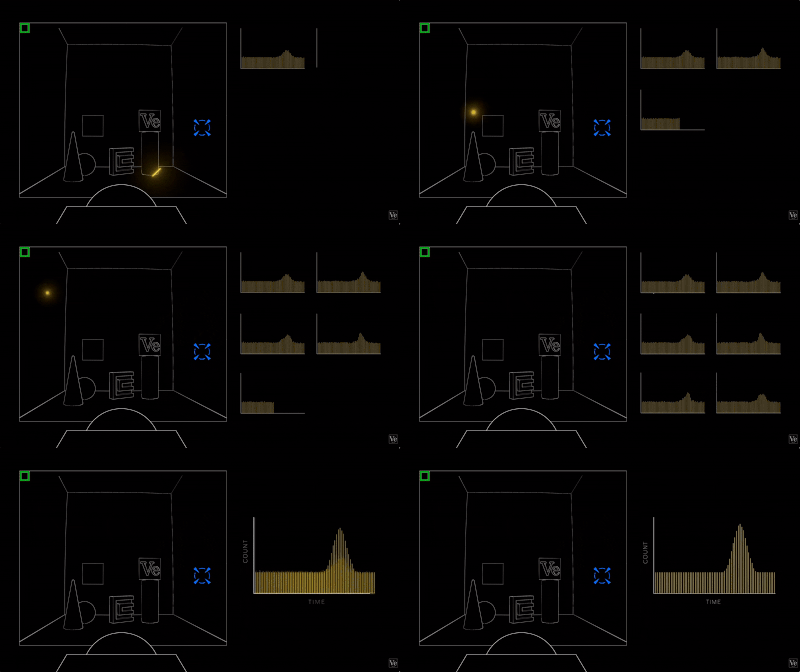
Camera Culture research uses single-pixel imaging to capture light in motion at trillion-frame-per-second speeds, revealing the invisible.

Dream engineering, pioneered at the MIT Media Lab, is named the most powerful idea of the 21st century by BBC Science Focus experts.
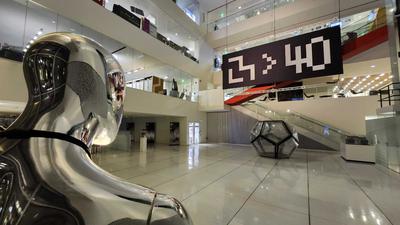
Explore the MIT Media Lab 2025 Impact Report—advancing AI, creativity, sensing, and sustainability in the Lab’s 40th year.
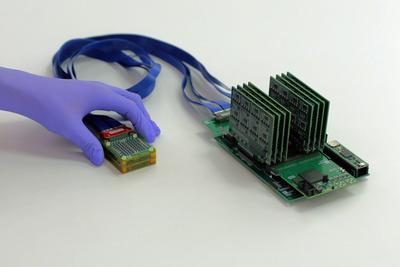
MIT Media Lab researchers developed a portable ultrasound sensor for earlier breast cancer detection, expanding access to screening.

Join MIT Professor Mitchel Resnick of the Lifelong Kindergarten research group to explore new technologies, activities, and strategies for helping children develop as creative, curious, collaborative, and caring learners. In each episode of this podcast series, Mitch will interview educators and re…

View recent awards and recognitions received by members of the Media Lab community in the modules attached here.

Chaal receives Honorable Mention at the 2026 Architecture MasterPrizeWe are delighted to share that Chaal, designed by City Science researchers Leticia Izquierdo and Thomas Sanchez, has received an Honorable Mention in the 2026 Architecture MasterPrize.Chaal is a sustainable, self-contained sunken …

A pink, potato-like robot named Orifice is Philadelphia's warmhearted reply to the joyless Uber Eats delivery bots rolling through Old City.
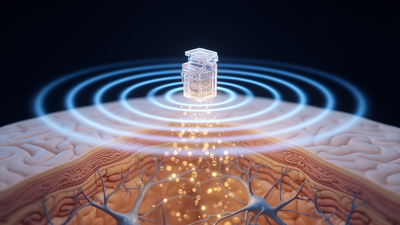
By Nathaniel BowmanAn implantable device developed at the Massachusetts Institute of Technology combines a miniature ultrasound array with a drug-delivery cannula to push therapeutic molecules farther into brain tissue than passive diffusion alone can achieve. In a study published in the journal De…
Vision The agentic web needs a common, reliable, and interoperable way to locate an AI agent given its identifier. Agent discovery is the automated process by which an external system resolves a known agent identifier to the information needed to communicate with that agent, including its network …
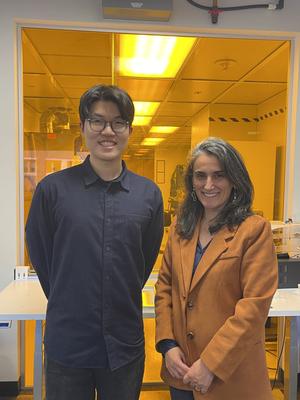
Hyeokjun Yoon, a PhD student in the Conformable Decoders group, has received a 2026 WHAM Edge Award from Women’s Health Access Matters (WHAM) for his research on AI-guided portable 3D ultrasound for accessible breast cancer imaging.The WHAM Edge Awards support early-career investigators pursuing in…

An interactive simulation exploring event-related congestion, traffic bottlenecks, and mobility interventions in Guadalajara, Mexico.
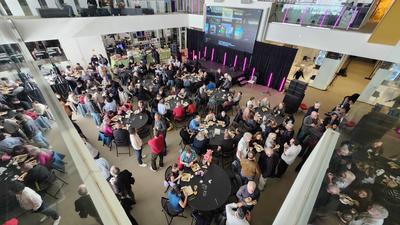
Over 600 alumni and families joined the 40+40 anniversary celebration, making it the largest alumni event in MIT Media Lab history.
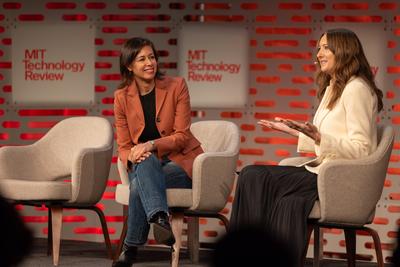
At EmTech Future, MIT Media Lab’s Jessica Rosenworcel explores how human-machine convergence is defining the next era of tech.
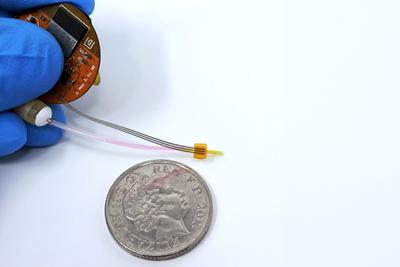
The Conformable Decoders group has developed LUCID (Long-term Ultrasound-enhanced Convective Injection Device), a new implantable platform that combines controlled drug infusion with miniature ultrasound technology to enhance the distribution of therapeutics within the brain.

PixBric by Hye Jun Youn of Tangible Media Group wins a Red Dot Award: Design Concept 2026.
By Ramesh Raskar and Pradyumna Chari (MIT Media Lab), Luca Muscariello and Vijoy Pandey (Cisco), Samuel Sharaf and Junjie Bu (Google), Karan Bharadwaj (Project NANDA)

Canan Dagdeviren, an associate professor at the MIT Media Lab and founding director of the Conformable Decoders research group, has been welcomed to the International Women’s Forum of Massachusetts (IWF/MA). The organization extended its welcome following peer nomination.IWF/MA connects women leade…
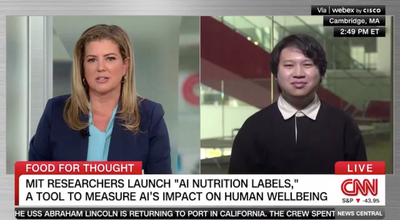
MIT Media Lab's AI Nutrition Labels use ImpactBench to track how tech affects human agency, critical thinking, and mental health.
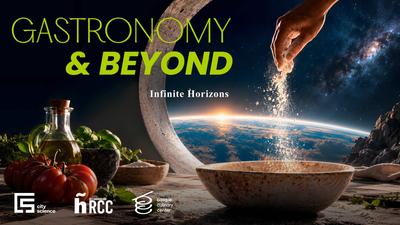
Gastronomy and Beyond (G+B) aims to unite individuals who contribute to innovation in the realms of culture, products, territories, sustainability, and community.Our mission is to expand horizons, foster creativity, and explore a myriad of concepts. SESSION 7 - Fall 2026Charles Spence - Oxford Univ…

Rosalind Picard, MIT Media Lab's affective computing founder, established the field with her 1995 paper and her 1997 book of the same name.

What the L1–L5 framework can teach us about human supervision, authority and governance for AI
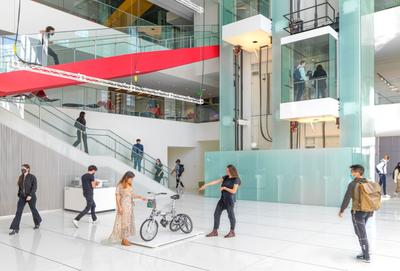
2026 MIT Virtual Graduate FairWednesday, September 30, 2026Time: 12:00 PM - 5:00 PM ETLocation: Virtual RegisterThis will be an opportunity for prospective students to meet with representatives from our 46 academic graduate programs, learn about summer research opportunities at MIT or explore life…