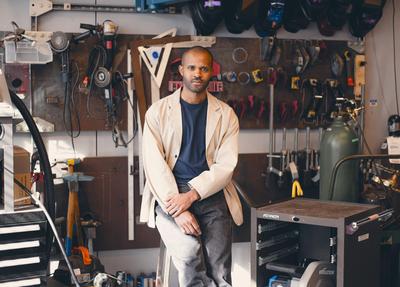
Spirit of Blobs: Artist Zachary Lieberman in conversation
Media Lab Professor Zach Lieberman talks about his artistic practice, his daily digital sketches, and his approach to new technologies.
Media Lab Professor Zach Lieberman talks about his artistic practice, his daily digital sketches, and his approach to new technologies.
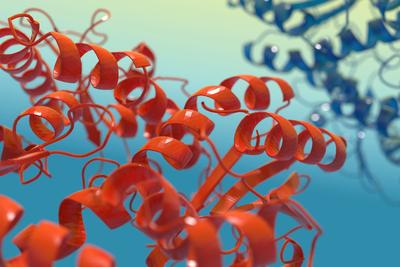
Researchers created a water-soluble version of an important bacterial enzyme, which can be used in drug screens to identify new antibiotics.
Alum Adam Haar and artist Carsten Höller talk about the Dream Hotel—a collaboration that began with Höller’s 2021 MIT CAST residency.
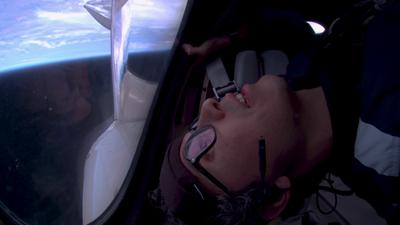
On Saturday, June 8, 2024, the "Galactic 07" flight took place in New Mexico. Virgin Galactic’s spaceship was converted into a suborbital science lab, with VSS Unity carrying three private astronauts including Tuva Cihangir Atasever, a Turkish Space Agency (TUA) astronaut, and an Axiom Mission 3 (A…
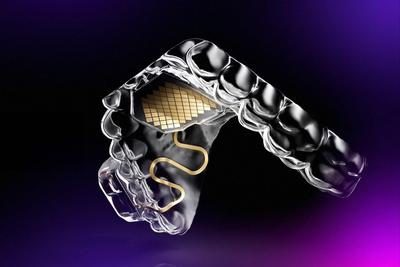
The startup Augmental allows users to operate phones and other devices using their tongue, mouth, and head gestures.
Future You, developed by Dr. Pat Pataranutaporn, allows users to explore possible futures by chatting with an older version of themselves.
Professor Pattie Maes chose a career in computer science for practical reasons, but was drawn to the amazing research being done at MIT.
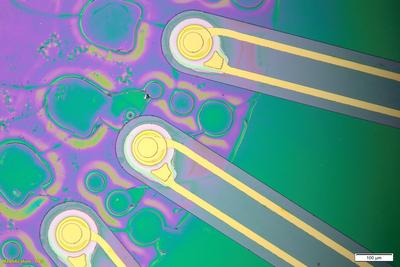
MIT engineers’ implantable ImPULS device could become an alternative to the electrodes now used to treat Parkinson’s and other diseases.
MeMic is a wearable recording device developed in the Media Lab’s Fluid Interfaces group.
Whether you’re on social media or surfing the web, you’re probably sharing more personal data than you realize. The NOVA documentary, Secrets in your Data, hosted by Alok Patel, explores how our personal data is collected and used online. It highlights the risks and benefits of data sharing, traces…
Media Lab researcher Nikhil Singh and alums Aruna Sankaranarayanan and Matt Groh discuss ways that deepfakes may affect the 2024 elections.
Professor Alex ‘Sandy’ Pentland was among the experts participating in a panel discussion on how AI may affect the 2024 elections.

Covering a talk from PhD student Kevin Dunnell, John Werner highlights Dunnell and his work for an article on AI, text, and multimodal data.

This award is given to students from Macau, Hong Kong, and Mainland China who have demonstrated academic prowess and community involvement.

Kevin Dunnell and Alfonso Parra Rubio were part of the group that designed Momo, a project developed from a space architecture course.
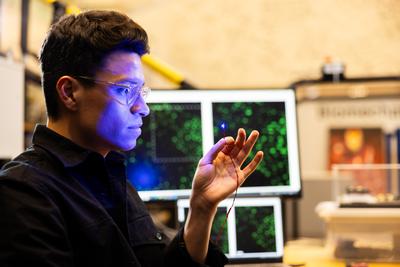
A new study suggests optogenetics can drive muscle contraction with greater control and less fatigue than electrical stimulation.
They were honored in the Students and Education categories respectively.
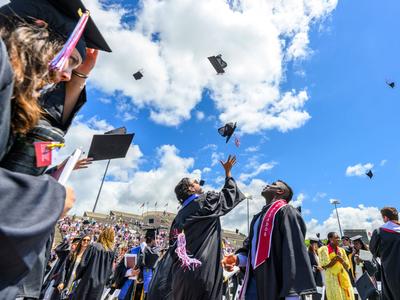
Professor Machover also held a commencement seminar, titled "Sound Futures: How Music and Technology Will Shape AI, Health, and Community.”
MIT alum Audrey Chen talks to MIT News about her career, including joining Media Lab spinoff Formlabs as a project manager.

We're so proud of everything you've accomplished here, and can't wait to see what you do next.
In Scientific American, Dr. Pat Pataranutaporn and others consider the ways that art shapes our understanding of and interactions with AI.
Researchers from the MIT Center for Bits + Atoms and others show that yeast can be used as a low-cost filter to remove lead from water.

Convergence: Artistic Exploration from Nature to SocietyNARLabs, Taipei, Taiwan May 10 - August 10, 2024 Guided by the Taiwan National Science and Technology Council and hosted by NARLabs, Convergence: Artistic Explorations from Nature to Society brings together domestic and international artists-r…
Callender was awarded this prize for his body of work, Light Sculptures, Matters of Impermanence.