TAS-5: A Cross-Industry Framework for Transparent Disclosure of AI Involvement in Content Creation
The rapid integration of generative artificial intelligence into creative and professional workflows has outpaced the development of clear s
The rapid integration of generative artificial intelligence into creative and professional workflows has outpaced the development of clear s

Wishing you a warm, joyful holiday from the MIT Media Lab—celebrating creativity, discovery, and an auspicious start to 2026.

The Anemoia Device uses generative AI to mix custom scents that complement photographs and create synthetic memories.
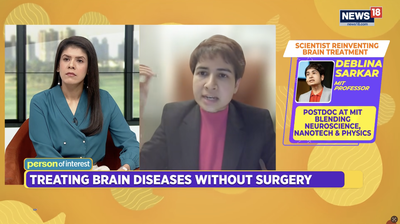
Deblina Sarkar talks to CNN News18 about her recent research on "circulatronics."
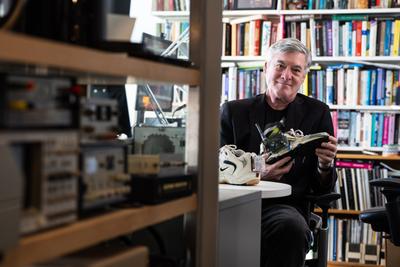
Joe Paradiso is named as an IEEE Fellow for his work in wearable sensing and mobile energy harvesting.
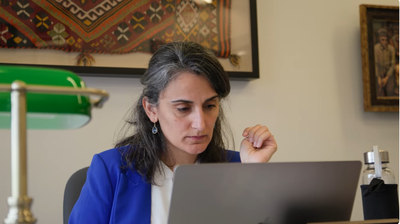
MIT Graduate Program in Science Writing produced a documentary video on Dr. Canan Dagdeviren and the Conformable Decoders group at the MIT Media Lab, detailing the scope of research and its impact to womens health.
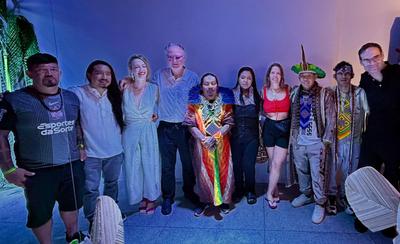
Activities and engagement from COP30From November 9th to November 18th at COP30, the City Science group and the City Science Network participated in a series of events, workshops, and exhibitions designed to connect research, policy, and public engagement. Below is a summary of the most relevant ac…
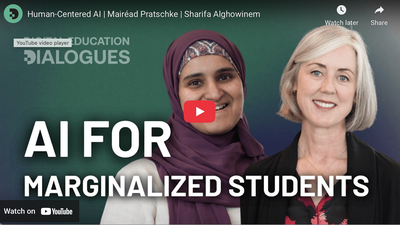
Experts explore human-centered AI in education, focusing on equity, AI literacy, and culturally aware tools for underserved communities.

Alex 'Sandy' Pentland talks to Alan Alda about human decision-making and curiosity.

The speech-to-reality system combines 3D generative AI and robotic assembly to create objects on demand.
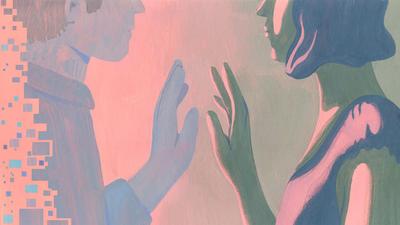
It may have profound implications for society and what it means to be human
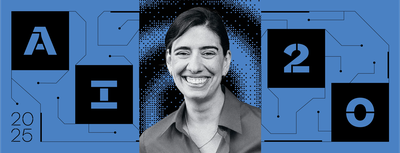
MIT Media Lab’s Karrie Karahalios named to Fast Company’s AI 20 for 2025 for pioneering work in contestable, human-centered AI systems.
Researchers are scrambling to figure out why generative AI appears to lead some people to a state of “psychosis.”
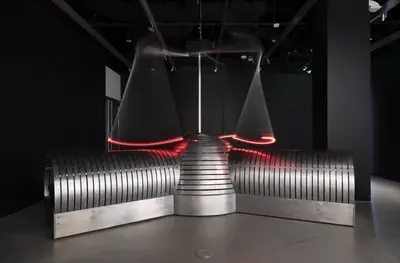
How MIT alumni created an experimental installation at the MIT Museum to turn our innermost worlds into collective experiences.

Color-changing DaVinci guitar launches with E Ink tech from MIT Media Lab, bringing customizable design to live music performance.

Discover how MIT's Adam Horowitz and the Fluid Interfaces group use dream engineering and sleep science to boost creativity and cognition.

Danielle Wood was quoted in a Washington Post article.
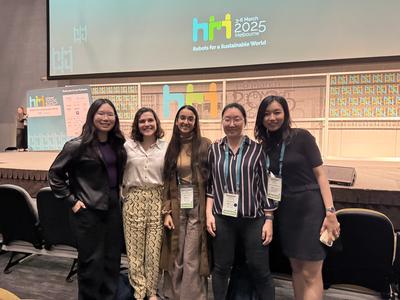
The initiative has connected over 130 students with alumni who provide guidance on navigating the workforce.
Artists and engineers Karl Sims and Alexander Mordvintsev speak about the potential of artificial life and creativity with Peter Bauman.

Media Lab researchers share insights on innovation, technology, and health in recent interviews featured on Bloomberg Businessweek.
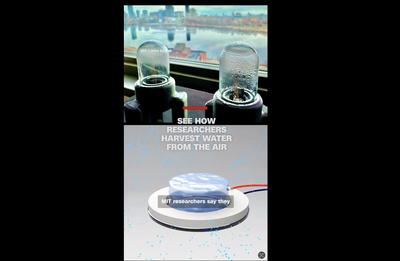
CNN spotlights how MIT researchers developed a new ultrasonic device that can extract clean drinking water from moisture in the atmosphere.

OpenAI’s push for broader appeal raised safety concerns. With new safeguards in place, can the company keep growing at the same pace?

The WHx program at the Media Lab seeks to revolutionize women’s health by focusing on critical but often overlooked health disparities that affect women globally. Women face unique health challenges throughout their lives, yet historical underfunding and research gaps have left many of these issues…

Professor Ed Boyden joins Neuroscience and Beyond to discuss optogenetics, expansion microscopy, and consciousness.