What tech will look like in 2039
We asked futurists, tech execs, academics, researchers, and a sci-fi writer to imagine our tech-driven society in 20 years.
We asked futurists, tech execs, academics, researchers, and a sci-fi writer to imagine our tech-driven society in 20 years.
Much has changed since we introduced the first generation of our Scratch programming language and online community, back in 2007.
Ollie Bray from the LEGO Foundation explains how Scratch supports the five characteristics of play that lead to deeper learning.

The next generation of Scratch expands how, what, and where kids can create with code.

ABSTRACT The impending introduction of autonomous vehicles (AVs) has posed regulatory and ethical questions regarding how they should operate. Much of the previous literature on this subject has explored these questions with an underlying model of streets based on the present.This project takes …
An NYC exhibit imagines driverless buses and mobile medical units resembling Popemobiles.
Global climate change is projected to change our planet this century and beyond.
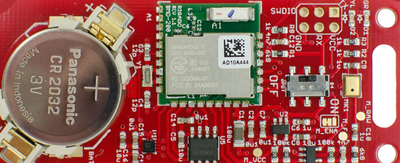
Rhythm Badge is an open-source, inexpensive research platform designed to measure face-to-face communication and team dynamics.
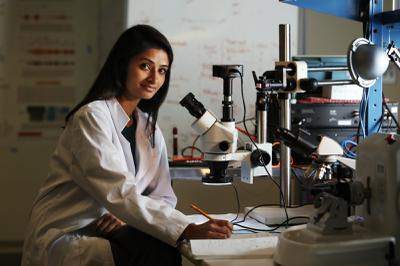
New optogenetic technique could help restore limb movement, treat muscle tremor.

Thoughts from the Media Lab's Space Enabled group and Space Exploration Initiative
Priyadarshi talks to Malini Goyal on a broad range of issues.

Study explores the micromechanisms underlying regional economic diversification.
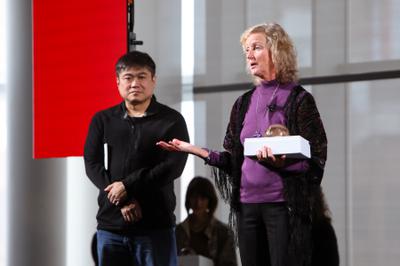
MIT's Media Lab honored Deborah Swackhamer in its 2018 Disobedience Awards for speaking out about official meddling.
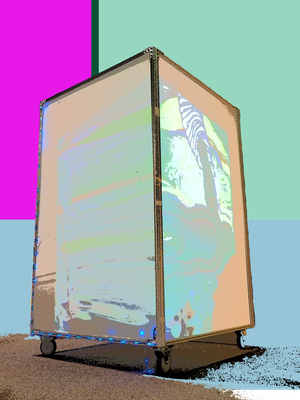
Because the walls and halls of E14 and E15 are subject to building codes and approvals, we decided to create our own walls.

Fadel Adib is one of 25 recipients of the Office of Naval Research's 2019 Young Investigator Awards, and the only awardee from MIT.
Some say bigger is better, but researchers at MIT will tell you that when it comes to tech, smaller things are far more impressive.

Assisting physicians and patients by novel computational processes at the point-of-care.
The technology could revolutionize policing, medicine, even agriculture—but its applications can easily be weaponized.
For amputees, robotic limbs that move like the real thing and are controlled by the mind are a game changer.
Inspiration from an MIT researcher who is harvesting energy from the body itself.

The technique, known as “implosion fabrication,” can be used to create nearly any shape imaginable.

The 2017 and 2018 fires in California were the air quality equivalent of the Daiichi nuclear disaster.
Misha Sra explains how galvanic vestibular stimulation (GVS) can improve VR experiences and open up new possibilities in gaming and beyond.
Sareen is a research affiliate within the Fluid Interfaces group, and worked with lab founder Pattie Maes to develop the project.