Election Misinformation Symposium: Fighting misinfo through fact-checking and deepfake detection
Discussion on fact-checking and deepfake detection at the Election Misinformation Symposium 2022.
Discussion on fact-checking and deepfake detection at the Election Misinformation Symposium 2022.
Deb Roy, director of the MIT Center for Constructive Communication, discusses his research and how technology can be used for social good.

What if the constant fear of violence, harassment, or discrimination dictates how we navigate public spaces? Our project delves into the profound impact of "WHAT IF" on women's lives, exploring how it limits freedom, shapes behavior, and contributes to the gendered constraints in public spaces. Thr…
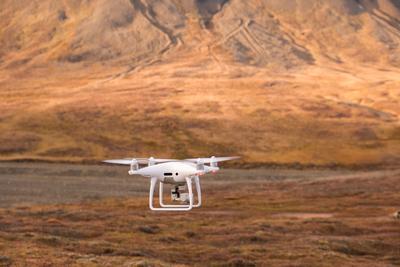
In October 2022, the MIT Space Exploration Initiative went on a field expedition in Svalbard. Based out of the Czech Arctic Research Station, the team tested technology to enable scientific access to remote regions, from the high Arctic to outer space. Svalbard is a Norwegian archipelago in the Arc…
Grammy Award-winning artist Jacob Collier talks to Opera of the Future alum Andy Hong about music and technology.
President Reif and faculty members welcome the Class of 2026 to MIT.
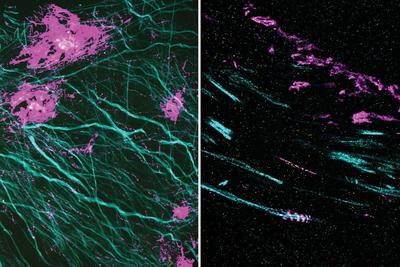
Separating densely packed molecules before imaging allows them to become visible for the first time.
Alum Mihir Sarkar looks back at the 10 years since his dissertation defense, and reflects on both the joys and the challenges of that time.
Francesca Riccio-Ackerman and co-authors consider advances in the treatment of conditions associated with aging.
Human Dynamics group members explore how technical CBDC design choices can be used to make a CBDC inherently resistant to money laundering.

Dan Calacci, a PhD student in the Human Dynamics group, talks about one of his projects that centers around the gig economy.
A panel of experts, including SEI director Ariel Ekblaw, discusses the history, culture, science, and future of NASA's Artemis program
Ziv Epstein talks about his latest research project, which will attempt to "map the networks of cooperation and serendipity at Burning Man."
In a recent MISTI course, students engaged on collaborative solutions to climate, health care, and economic development in the Middle East.
Fletcher co-authored the book Wonder Women of Science, which features the career of MIT Media Lab director Dava Newman.
MIT uses affective computing in efforts to improve human mental health.
Kate Darling discusses the interplay between artificial intelligence systems, animals, + humans, and what the question of sentience entails.
On KCRW's Life Examined, Rosalind Picard talks about the potential for technology to help people understand emotions and improve wellbeing.
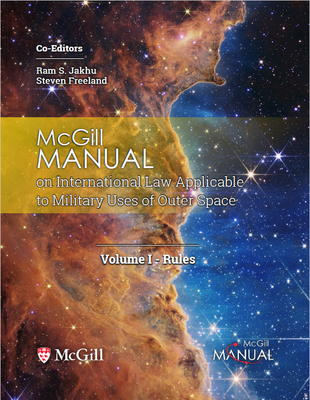
Dr. Elena Cirkovic is an Associate Expert for the recent McGill Manual on International Law Applicable to Military Uses of Outer Space.
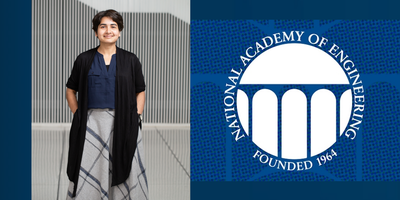
National Academy of Engineering (NAE) has recognized Deblina Sarkar, assistant professor at MIT and AT&T Career Development Chair Professor at MIT Media Lab, as one of the highly accomplished early career engineers. She has been invited to attend NAE’s Grainger Foundation Frontiers of Engineering 2…
Affective Computing PhD student Matt Groh and other experts offer a few recommendations to help people recognize falsehoods online.
Ovienmhada, with Danielle Wood, won the grant for "Applying the EVDT Integrated Modeling Framework for Environmental Justice Applications."
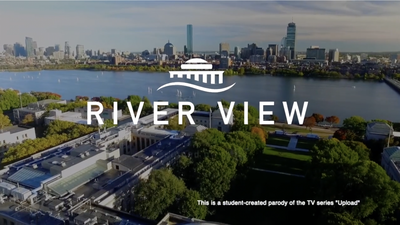
On the occasion of Emmy-award winning writer and director Greg Daniels' guest lecture at the "Virtual Beings and Being Virtual" workshop at MIT, one of the organizers created a parody of his TV series "Upload," where people can live eternally in a virtual world called Lakeview.
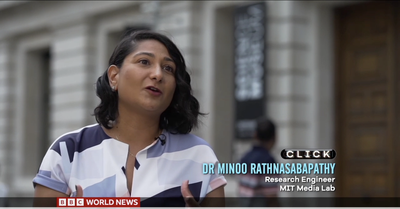
Dr. Rathnasabapathy was featured as an expert on space sustainability for broadcast segments covering dead satellites and space debris.