MIT launches Task Force on the Work of the Future
Institute-wide effort will study the evolution of jobs in an age of technological advancement.
Institute-wide effort will study the evolution of jobs in an age of technological advancement.
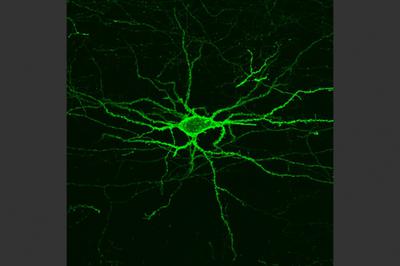
Fluorescent sensor allows imaging of neurons' electrical communications, without electrodes
How to Make (almost) Anything is a community as much as it is a class.
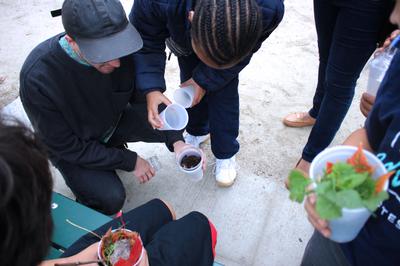
What counts here—first and last—is not so-called knowledge of so-called facts, but vision—seeing. Seeing here implies Schauen [to see] (as in Weltanschauung [worldview]) and is coupled with fantasy, with imagination.- Josef Albers, Interaction of ColorIn the spring of 2017, I developed an education…

MIT students, faculty, and collaborators gave Lightning Talks during Here be Dragons 2018
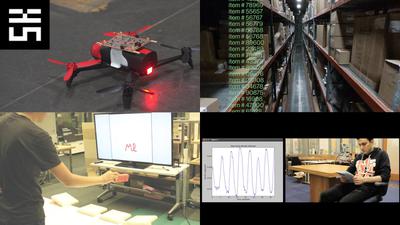
We have four openings for visiting students (internships) in the summer of 2018 in the Signal Kinetics group directed by Prof. Fadel Adib at MIT. The visitors will be conducting research on the projects below. The duration of the visiting appointment will be at least two months between May-Septemb…

A new Media Lab initiative seeks to connect humanity with ocean exploration
Lessons from a month in a Chinese knitting plant.
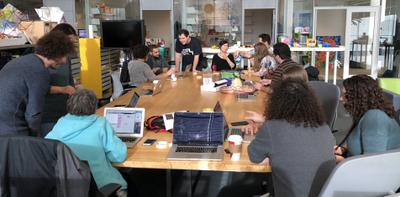
Media Lab researchers are teaming up with public librarians to design new projects and programs for libraries.
Eduardo Castello, Postdoctoral Fellow at the MIT Media Lab (Human Dynamics Group) talks about the evolution in robot design and development
All people are created equal, but in the eyes of the algorithm, not all faces are just yet.A new study from MIT and Microsoft researchers (pdf) is providing more evidence of exactly how bad facial-recognition software is at accurately identifying darker faces, especially when those faces belong to …

Biomimicry looks to living organisms to create the future of sustainable engineering.

Lifelong Kindergarten: Cultivating Creativity through Projects, Passion, Peers and Play has been selected for a 2018 PROSE Award.

Learn more about our MLTalks series, including upcoming events.
Examination of facial-analysis software shows error rate of 0.8 percent for light-skinned men, 34.7 percent for dark-skinned women.
The medical profession has an ethic: First, do no harm.Silicon Valley has an ethos: Build it first and ask for forgiveness later.Now, in the wake of fake news and other troubles at tech companies, universities that helped produce some of Silicon Valley’s top technologists are hustling to bring a mo…
A new review of face recognition software found that, when identifying gender, the software is most accurate for men with light skin and least accurate for women with dark skin. Joy Buolamwini, an MIT Media Lab researcher and computer scientist, tested three commercial gender classifiers offered as…
New research out of MIT’s Media Lab is underscoring what other experts have reported or at least suspected before: facial recognition technology is subject to biases based on the data sets provided and the conditions in which algorithms are created.Joy Buolamwini, a researcher at the MIT Media Lab,…
Real-world biases and artificial intelligence
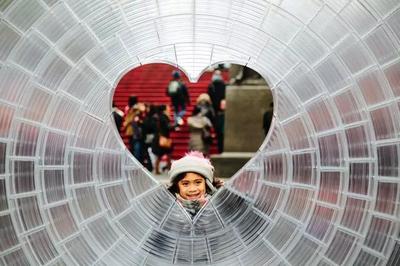
1,000 clear plastic tiles assembled into a 10-by-12-foot circular installation with a heart-shaped cutout in the middle

With the release of our “Resisting Reduction” issue of the Journal of Design and Science, the MIT Press and the MIT Media Lab are also pleased to announce a call for essays on the topic of resisting reduction, broadly defined, to be published in the Journal. Essays should be in conversation with Jo…
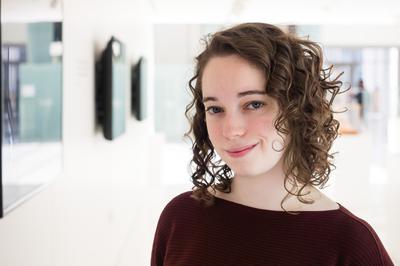
"I like to think of the voice and all the sound from our bodies as some kind of rhythm of life and music of life."
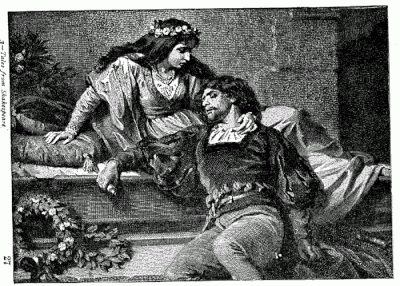
By Phil TinnTo Dock, or Not to Dock?The last few years saw a rapid adoption of app-based taxis, shared bikes, and increasingly, electric vehicles across the world. Despite the arrival of these new platforms and vehicles, 2017 wrapped up with another series of inconclusive efforts in defining the …